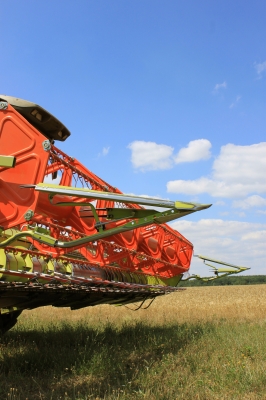
Multinational Food Factories

Multinational Food Factories

FORESIGHT

Global food trade will change dramatically in the next ten years. Developing countries and China in particular will need to import much more than they have and will be vulnerable to future disruptions in supply. The urgent need for food imports in developing countries and the applications of genomics and automation to agricultural production will create attractive market opportunities for corporate players. Family owned businesses that dominate farm production today will continue to be important players, but multinationals will begin to dominate many agricultural markets with large productive farms. China will rely on national companies to secure future imports. Chinese companies, both private and state-owned, will scour every continent for agribusiness opportunities. Tensions with China’s neighbors, particularly India and Vietnam, are going to rise over access to food and water. The new supplies for developing countries will mostly come from Latin America and Africa.

RECENT SIGNALS OF CHANGE

For many emerging economies, self-sufficiency in food supply is no longer possible. Rapidly growing food demand is forcing many countries to rely on imports of food.

  • In 2009, the Food and Agricultural Organization of the United Nations (FAO) estimated agricultural production will have to increase by 70 percent by 2050 to meet projected demand. The increased demand will be due to a larger global population and higher daily calorie intake per person. Most of the increased demand will come from developing countries. Unfortunately, around the world most land suitable for farming is already farmed.
  • In 2015, the FAO predicted that climate change because of increased greenhouse gas emissions would likely have significant impacts on future food and livestock production. The agricultural sector already absorbs 25 percent of the total economic impact of climate-related disasters in developing countries.
  • Based on FAO and US Department of Agriculture (USDA) statistics, the U.S. has 11% of the world’s arable land. The U.S. is the largest producer of corn in the world, responsible for over one-third of the world’s corn crop, and the largest producer of soybeans. It is also among the top wheat and rice suppliers, and is responsible for one quarter of the world’s meat exports.
  • An estimated 20% of U.S. agricultural production (based on volume) is exported, making the U.S. the largest food exporter in the world, responsible for 16% of global agricultural exports. In addition to the United States, the other major agricultural exporters are Canada, Australia, Brazil, and Argentina.
  • World fish production increased from 95 million tonnes in 1990 to approximately 165 million tonnes in 2014. Farmed fish accounts for the entire increase in world fish production since 1990. Caught fish remains flat at approximately 90 million tonnes per year. In 2013, human consumption of farmed fish in tonnes exceeded beef consumption around the world.
  • China currently feeds 20 percent of the world’s population with only 7 percent of the world’s water supply. 80 percent of the China’s water is in the southern part of the country, while almost 70 percent of the farmland and 50 percent of the population lies in the northern part. Much of China’s water is also unfit for human consumption, 70 percent, and agricultural use, 30 percent. Consequently, China is one of the fastest growing agricultural importers, and the U.S. comparative advantage in land has enabled it to be the largest agricultural supplier to China.
  • All governments actively manage their agricultural markets. China is no different.
    • China’s commodity exchanges are the largest in the world, but remain largely closed to foreign investors. The Dalian futures market is the largest commodities exchange in China. By volume, seven of the top 10 agricultural-commodities contracts traded anywhere in the world last year were based in China.
    • In September 2016, China’s Premier Li Keqiang said China would soon lift a ban on U.S. beef imports that had been in place for more than 10 years due to concerns about the spread of bovine spongiform encephalopathy (BSE), or mad cow disease.
    • China consumes almost a third of the world’s cotton, Recently, China’s government accumulated a stockpile of cotton that was 60 percent of world stocks, enough for 10 billion pairs of jeans, because of a government program to buy cotton from Chinese cotton farmers with guaranteed minimum prices. At the same time, China’s government controls cotton imports through a strict quota system and large import tariffs.
  • Import demand for food and other agricultural products is expanding fast in developing countries besides China. In 2014 about two-thirds of U.S. agricultural exports went to developing countries, compared with 48% in 1994. Many are becoming dependent on imports to meet their increasing demand that is outstripping country production.
  • The Commonwealth of Independent States (CIS) and Central Asia lost some 40m ha of productive land in the post-Soviet period.
  • Africa agricultural production has been increasing rapidly, and has the potential to increase a lot more.
    • The FAO estimates Rwanda’s grain production increased by 300 percent between 2000 and 2014.
    • The value of crops in Cameron, Ghana, and Zambia rose by at least 50 percent in the past 10 years.
    • 400 million hectares (ha) of land in West Africa’s Guinea Savannah is available for food production; much of it has the ability to double crop; and only 10 percent is currently cropped. (For comparison purposes, Germany currently has a total of 20 m ha under cultivation.)

Large multinationals dominate the agricultural equipment and materials supply industries, while farms large and small are largely family owned. The long-term trend of consolidation in the agricultural equipment and materials supply industries and farms continues, driven by innovation and the need for more productive farms.

  • Information data on the Earth ecosystem and the ability to gather more using space satellites and in-situ sensors are rapidly increasing. Much of this information is directly useful to improving farm productivity, and as a result a new wave of innovation in farming is occurring.
  • In the United States, farming is a family-owned enterprise—nonfamily corporations run just three percent of farms—and large farms dominate—eight percent of the farms account for 80 percent of US food sales, according to 2012 data from the USDA. Big problems continually face farmers; the successful ones will be savvy, entrepreneurial, risk takers, and effective users of new technology.
  • In 2014, the FAO estimated 90 percent of the world’s more than 570 million farms are owned by an individual, small group of individuals or household. Only 6 percent of the world’s farms are larger than 5 hectares.
  • Sensitivities around foreign ownership of farmland are increasing in developed countries. In April 2016, the Federal Treasurer of the Australian government declared the proposed A$370m sale of S. Kidman & Co. to China’s Dakang Australia Holdings (part of the Pengxing Group) was not in Australia’s interest. Last year the sale was rejected on security grounds because some of the property adjoined some sensitive military sites.
  • The suppliers to farmers are often multinationals. Today some of the largest ones are pursuing mergers and acquisitions to consolidate global capacity and position themselves for agricultural-market upturns. These are very large deals, often cross-border, requiring anti-trust and regulatory approvals of the governments of countries affected.
    • In August 2016, the U.S. national-security regulator, the Committee on Foreign Investment in the U.S., or CFIUS, approved China National Chemical Corp.’s planned $43 billion takeover of Swiss seed giant Syngenta AG. The US regulator was involved because about a quarter of Syngenta’s sales come from North America. The deal still needs to be approved by European authorities.
    • At the beginning of September 2016, Monsanto Co. and Bayer AG announced that Bayer would buy Monsanto in a $57 billion deal that would create an agricultural powerhouse. The German pharmaceutical and chemical multinational would obtain Monsanto’s market-leading position in seeds and crop genes, and position Bayer for the potential growth in high-tech crops to sustain the world’s population.
    • Dow and DuPont announced plans in December 2015 to combine to form DowDuPont, a multinational worth $130 billion, and then split into three publicly traded companies—an agriculture firm, a material sciences business and a specialty products company. Europe’s antitrust authorities have said they are concerned about possible reduced competition and innovation in the seed and farming products industry as a result of the merger.
  • Food quality and safety issues arising from new technologies, particularly GMO foods, are explosive topics.
    • In July 2016, more than 100 Nobel laureates signed a letter to Greenpeace urging Greenpeace and its supporters to abandon their campaign against GMOs in general and Golden Rice in particular.
    • In September 2016, a former employee at a Chinese state laboratory that studies GM foods said his superiors had him falsify reports. This allegation quickly spread on China’s social media. The Beijing government is trying to shift public opinion toward acceptance of GMO food.

PLAUSIBLE OUTCOMES IN TEN YEARS

The global food supply system will generally meet the world’s rapidly increasing demand for calories; but there will be many disruptions and problems and many food security and health issues. The dynamics of the system will remain chaotic with the commercialization of disruptive technical innovations, the imposition of new trade restrictions by governments, the cyclical nature of commodity markets, the impacts of climate change and weather patterns on arable land, and the independent investment decisions of multinationals pursuing perceived opportunities.

Corporate power over food production is going to increase significantly.

  • Farms will continue to consolidate and get bigger in major agricultural export regions like the United States and Canada as well as in developing countries with promising export opportunities.
  • New multinational entrants will start buying and forming large farms, employing technology to greatly improve the farm’s productivity and distribution system’s efficiency.
  • Because of the growth opportunities and risks, the multinationals will leverage investments in agriculture innovation. Silicon Valley will likely be a key center of agricultural innovation.
  • The image of farming and agriculture will begin to shift from an important cultural and social activity to a strategic natural-resource exploitation activity. Will multinational farmers be viewed any differently than multinational oil companies?

Foreign multinationals will be investing in productive farmland in Canada, the United States, Brazil, Argentina, and many countries in Africa.

  • Both state-owned and private multinationals from China will be very active.
  • Foreign ownership of many nations’ farming capacities will increase. How might this influence a nation’s food and water security concerns and policies?
  • How will federal or state farm or crop subsidies be affected?
  • How will efforts to create a resilient regional ecosystem—where regional policies for food production, water use, economic industries, and environmental management are coordinated, if foreign multinationals assemble large farms focused on export opportunities?

Population protests and disagreements among NGO groups over food and water issues could increase in the future in both developed and developing economies because of many conflicting issues:

  • Food security and food safety issues associated with the growth in imports.
  • Loss of small-farm jobs.
  • Increased availability of information about the use of local water, land, and infrastructure resources.
  • Potential risks to regional ecosystems from GMO foods.
  • Regional and local water policy decisions.
  • Climate change mitigation and adaptation policies that conflict with agricultural markets.

Latin America and Africa countries will turn into the world’s food baskets.

  • The major increases in food production over the next ten years to meet the world’s population needs for more calories will come from Latin America and Africa.
  • The major supply countries could organize themselves into the “OPEC of food’—or OFEC, if they realized the leverage they might have and coordinated national strategies for exploiting their farming capacities.
  • Precision-farming technologies will spread from North America to Europe and Latin America and then Asia and Africa.
  • The center for technological innovation will continue to be in North America.

National governments will continue to try to shape food demand and production in their countries.

  • Food imports will continue to be strictly monitored and controlled in countries. Governments will continue to apply targeted tariffs or restrictions to reduce imports and protect national producers.
  • Food trade issues in front of the World Trade Organization will increase.
  • National and local water policy decisions will be affected by the increases in food exports, and possibly by the changed ownership of large farms.
  • Tensions among countries in Asia will rise over these issues. China and India will compete worldwide for access to food supplies. Vietnam and Thailand will be squeezed.
  • Energy and environmental-management policies of many countries will be highly influenced by food and water security outcomes.

Farmed fish production will very likely continue to grow rapidly because of technology innovations and provide an increasing part of total calorie intake around the world.

The Era of the Multinational

FORESIGHT

The world is about to see the greater presence of multinationals, particularly from emerging-economies like China. While resistance to immigrants and foreign companies today is rising in many countries, the overall volume of cross-border flows of products, services, money, and digital information is increasing, and we’re entering a phase where foreign multinationals are going to have more influence on the economic health of every country. Much of the multinational growth will be from Asian companies. National governments will struggle to develop policies for the more dynamic global economy that will encourage the multinationals’ investments in their countries, get them to bring new technologies, products, and services, and yet hold them accountable for their actions, behavior, and negative outcomes. And the governments will make many policy mistakes in accommodating the increased activities. Given the size of the multinationals and the sectors of the economy they shape, mistakes by the multinationals and government policies could be very expensive for everyone.

RECENT SIGNALS OF CHANGE

The role of multinationals in national economies appears to be increasing, and countries are leery of it. Digital globalization and the growth of cross-border supply chain networks are increasing the competitiveness of international companies around the world. Countries are reacting with a range of new policies to the perceived multinational threats and opportunities. Key signals that a new era of the multinational may be coming include:

  • Cross-border production, investment, and innovation by multinational corporations have been key drivers in the world’s economic growth since 1990. According to the World Investment Report 2015 by UNCTAD, multinational affiliate sales as a share of world GDP more than doubled from 1990, increasing from 25 percent in 1990 to 50 percent in 2014. This extraordinary activity of multinationals has transformed the economies of developed and developing countries, changed dramatically where and how commerce is done, and affected the dynamics of local and global markets. When multinationals set up operations in a foreign country, they are taking steps to compete in a local complex, dynamic environment that requires local information gathering, direct access to best-available local resources, and operational decision making to be as flexible as what the local competitors can do. In addition, setting up locally helps avoid trade and regulatory barriers to foreign companies.
  • The McKinsey Global Institute report on digital globalization, published in February 2016, highlighted the dramatic changes in global flows because of cross-border digital data flows.
    • Traditional global flows of goods, services, and finance are generally increasing, but have declined relative to GDP, from 53 percent of GDP in 2007 to 39 percent in 2014.
    • Emerging economies are now counterparts on more than half of global trade flows.
    • But cross-border bandwidth usage increased from 4.7 Terabits per second (Tbps) in 2005 to 211.3 Tbps in 2014, a 45x increase and McKinsey estimates data flows now impact world GDP more than global trade in goods does. This is because digital platforms with their near-zero marginal costs of communications and transactions across borders enable faraway buyers and sellers to find each other and conduct business cheaply and efficiently.
    • A new breed of multinational, the micro-multinational, can now expand overseas quickly and cheaply, enabled by global internet platforms like Amazon, eBay, Facebook, PayPal, and Kickstarter. At the end of 2015, the user bases of Facebook (1,590 million), YouTube (1,000m), WhatsApp (1,000m), WeChat (650m), Alibaba (407m), Instagram (400m), Twitter (320m), Skye (300m), and Amazon (300m) were of the same scale as the world’s most-populated countries China (1,370 million), India (1,314m), United States (321m), Indonesia (256m), and Brazil (206m).
  • Despite the stimulus from increasing cross-border flows, many governments still limit the participation of foreign owned corporations to preserve local markets for local companies.
    • At the recent G-20 summit in China at the beginning of September, China faced much criticism for limiting inward investment while large state-controlled and non-state controlled Chinese companies, the beneficiaries of protected markets, are able to invest freely overseas.
    • In September 2016, J. P. Morgan Chase became one of the few international investment firms approved to operate a wholly owned investment company in China. How long has it taken? This license was issued shortly before the beginning of the G-20 summit on economic matters.
    • Market access/cybersecurity problems produce foreign corporate allies. Microsoft and Chinese company Huawei Technologies just announced their joint support of the EastWest Institute, a nonprofit focused on encouraging open discussions of cyber security issues and new information technology products. Microsoft is facing the antitrust heat from Chinese regulators while Huawei can’t compete for US telecommunications-equipment opportunities because of US government concerns over cyberspying.
    • In August 2016, the Committee on Foreign Investment in the U.S., or CFIUS, a Treasury-led panel, gave the go-ahead to state-owned ChemChina’s purchase of Swiss-firm Syngenta, which supplies about one-fifth of the world’s pesticides and about 10 percent of the soybean seeds to US farmers. When completed, this $43 billion deal would be the biggest overseas deal by a Chinese company.
  • In the last ten years, the incomes of most households in advanced economies have been flat or fallen. According to a McKinsey Global Institute report, 65-70 percent of the advanced-economy populations were in groups with flat or declining real income in the period 2005 to 2014. The percentages ranged from 97 percent in Italy, to 81 percent in the United States, to 63 percent in France, and to 20 percent in Sweden. It’s not surprising that social and labor issues are rising in the advanced economies. More immigration and successes of foreign-owned corporations create hot buttons for politicians and government officials to address.
  • The investment opportunities in Europe are so bleak European companies have recently been able to borrow money at negative interest rates. French company Sanofi SA and German company Henkel AG raised more money from bond sales recently than they will have to pay back when the debt matures in a few years. The bonds were priced with a yield of minus -0.05 percent.
  • As the influence of multinationals increases in countries, government resistance to that influence appears to increase as well.
    • European government agencies are trying to protect European markets from being dominated by foreign-owned multinationals. The European Commission recently ordered the Republic of Ireland to collect $14.7 billion in unpaid taxes from Apple. The order appears to be an effort by the European Commission both to force Ireland to increase its low corporate tax rate of 12.5 percent and to grab back some of the cash generated by Apple from sales in the European Union. In another move, the European Commission is planning to propose EU-wide rules to give European publishers new rights to seek payment from online news aggregators like Google.
    • A recent US Treasury white paper claims the European Union’s competition commission is “targeting U.S. companies disproportionately.”
    • Anti-foreign company sentiments work both ways: Volkswagen’s $19.4 billion settlement for its diesel-emissions contraventions is significantly higher than GM’s $900 million fine for concealing an ignition-switch defect tied to at least 174 deaths.
    • Didi Chuxing’s acquisition of Uber’s China business will essentially preserve China’s ride-hailing market for Chinese companies. Uber probably discovered this is the outcome the Chinese government wanted to happen.
  • Governments are advancing proposals to make big business, including multinationals, better citizens where they operate.
    • The US Security Exchange Commission is re-evaluating its disclosure rules for public companies, including whether to require mandatory disclosure of risks related to climate change. A task force of the Financial Stability Board of the G20 countries will soon issue a report with recommendations on how companies in different industries should disclose financial risks posed by climate change.
    • Shortly before she took over as UK’s Prime Minister in July 2016, Theresa May proposed to reform the governance of big business by including employee representation on boards, “I want to see changes in the way that big business is governed. The people who run big businesses are supposed to be accountable to outsiders.” She also called for a protective industrial strategy that would defend important sectors from foreign takeovers.
  • A new phenomenon is the rapid growth of emerging-market multinationals, particularly from China, around the world. Their methods and skills in operating as a multinational vary widely.
    • Wall Street Journal article on September 9, 2016 about a stockpile of one million metric tons of aluminum, worth about $2 billion and representing about 6 percent of the world’s total inventory, stored in a remote desert location in Mexico, that appeared to be owned by China Zhongwang Holdings Ltd., owned by the billionaire Liu Zhongtian. It appeared Zhongwang Holdings was trying to evade US tariffs imposed by the US Department of Commerce for selling aluminum overseas while receiving subsidies in China by routing the aluminum through Mexico to disguise its origins.

PLAUSIBLE OUTCOMES

Much is uncertain about the future for multinationals; many factors will affect their investment and location decisions. A big factor will be the general health of the global economy and the location of new market opportunities. Important factors include how nationalism trends will play out in the advanced economies and what new government policies to open or close domestic markets to multinationals will be enacted. Other factors include how aggressive will state-controlled and private Chinese multinationals be in foreign markets and how will the energy supply and demand situation evolve around the world. Given these factors, the following are plausible but uncertain developments.

  • Markets will increasingly be connected. Despite national governments’ concerns about domestic unemployment and failures to implement new free-trade agreements, global cross-border flows could increase significantly, driven by the ever-expanding global access to the internet and the competitive efforts of multinationals to increase market share. McKinsey’s report on digital globalization estimated cross-border bandwidth usage per year will increase about 9 times in the next five years.
  • Foreign multinationals are going to have more influence on the economic health of countries. In most countries around the world, multinationals will be increasingly important. Their number and penetration of local markets will expand.
  • The dominance of Silicon Valley companies in high tech markets could wane. High-tech emerging-economy companies, particularly from China, will begin to assume market leader positions in several industries.
  • The dominance of natural resource suppliers from advanced economies will be replaced by the dominance of natural resource suppliers from developing countries. See the recent post entitled, “Who Will Do Well After the Global Commodities Glut?”
  • Multinationals will become the world’s experts in resilient or adaptive strategy for complex environments. To compete effectively against multinationals and local companies in tens to hundreds of local markets, multinationals will become increasingly sophisticated in the strategies, governance, and processes for information gathering, decision-making, and execution in dynamic, complex environments. See the recent blog I posted on the US Army’s new doctrine for fighting insurgents in urban environments that is a framework for an adaptive strategy.
  • The era of the multinational may not happen if multinationals can’t handle cyber risks. With the greater dependence on digital networks and systems, multinationals will be continually vulnerable to cyber attacks. Most likely multinationals and governments will both invest significant resources to protect digital data and thwart cyber attacks, and global integration won’t be slowed. But cybercrime will be a major industry, and some multinationals will experience catastrophic losses.
  • The fate of many multinationals will be tied to cyber relationships with their home countries. The cyber relationships between many multinationals and their home country governments will be strong, although often obscure. It will also be hard for many companies to effect digital independence from the home country government.
  • An interesting decision is whether a multinational can or should align themselves with their home-country identity. Some will do so for a variety of reasons, but over time as they grow many will distance themselves from close association with their original home government.
  • Cross-border mergers and acquisitions will be key feature of the global economy as multinationals adjust their portfolios in response to the changing market and government-policy conditions.
  • Due to social unrest and political tensions in North America and Europe, new free-trade agreements will be difficult to pass and implement in the next ten years. The existing global mechanisms for encouraging free trade and discouraging domestic subsidies will be considered effective enough.
  • The number of large financial penalties on foreign multinationals will increase for fraud, human life and property damages, or simply being in the wrong place at the wrong time will increase, perhaps substantially in response to political pressures to punish large foreign multinationals taking advantage of the country’s good will.
  • Bilateral relations will be severely tested when one government severely cripples a multinational from another country. Some governments will intervene to protect their multinational and the jobs, tax payments, and other benefits accruing to the country from the multinational’s success. (Can I contract with Russia’s military to hit that country?)
  • Seeing the growing influence of multinationals in their economies, governments could push new policies to make multinationals more accountable for the social costs of their products, services, and operations wherever they operate.
  • Governments could push for global standards or systems for business taxes, environmental regulations, climate change risks, and shareholder, board, and management governance.
  • As European companies struggle to compete with American internet platform companies and new Asian juggernauts for local revenues, European authorities will implement policies to protect local companies, exact large financial penalties on the multinationals, and reduce the influence and dominance of US multinationals.

Who Will Do Well After the Global Commodities Glut?

FORESIGHT

Global commodity markets are beginning to turn around, but the industry leaders could be changing. For the last three years, the global economy has been severely impacted by the oversupply of commodities and dramatic price drops. The large multinational producers have been desperately trying to survive, and if they’re fortunate position themselves strategically for the long, slow recoveries. For commodity producers with money now is the best time to negotiate future commodity-extraction agreements. Countries with low-cost reserves to license will likely have to change their terms to attract new foreign investment. Chinese producers will likely become the new global leaders in many key commodity markets. Anti-trade/anti-foreigner sentiments have been increasing around the world, and these will influence where multinationals go. With the growth of developing-country multinational producers, the trend toward increased transparency of large government commodity agreements could reverse, and corruption levels could worsen. Multinationals from developed countries will be somewhat less active and this will reduce the influence of their countries’ foreign offices around the world.

RECENT SIGNALS OF CHANGE

While commodity cycles and their effects on multinational producers and developing countries are normal, the scale of changes in the down cycles and the reversal of so many large fortunes are catching much of the world by surprise. It appears most commodity markets have passed their worst moments and are now recovering, albeit very slowly: the new cycles are beginning.

  • Many commodity supply leaders—companies with the best-paid management talent—are in serious financial trouble. Why did they get the timing of so many large capital investments wrong? Why were they expanding supply capacity after many years of demand growth, right before the crash?
    • Severe commodity downswings can occur almost overnight. Exports of copper to China in 2015 were half of what they were in 2012, when copper demand was at its peak. In 2015 the equity shares of the large Anglo-Swiss miner and trader Glencore, who has been very active in copper, fell to a sixth of what their value was in 2011.
    • The Spanish renewable energy firm Abengoa SA is struggling to avoid what could be Spain’s largest-ever corporate bankruptcy. It announced in August 2016 that its latest action was to sell five of its US ethanol plants for $357 million.
    • Petrobras is implementing a divestment plan to sell $15 billion in assets to help pay off the company’s very high debt load of $126 billion. In the spring and summer of 2016, Petrobras sold stakes in Argentina and Chile subsidiaries, a large offshore oil field to Norway’s Statoil, and petrochemical unites to Mexico’s Alpek.
  • The global economic slowdown and global commodities slump is also severely impacting an array of large services and equipment supply companies.
    • The mega ocean shippers like the Danish Maersk Line, Dutch Hapag-Lloyd, and China Bulk Shipping have 30% more capacity in the water than cargo. UK marine data provider Vessels Value says that in the five years through 2015, ship owners ordered an average of 1,450 ships annually. This year through July orders fell to 292 vessels. It will take several years before the surplus capacity is scrapped and demand for shipping increases enough. Maersk recently announced it was replacing its chief executive and was looking at splitting the company up.
    • The Union Pacific railroad in the United States suffered an 11% decline in total freight volume in the first half of 2016. Coal volume was down 21%.
    • Samsung C& T, Samsung’s construction arm, has lost at least $700 million in the Roy Hill iron-ore mine in Australia in the last two years. Unfortunately in 2013 before commodity prices began falling, Samsung C& T agreed to take the risk for cost overruns, while committing to an aggressive timeline for when the iron-ore exports would begin.
    • In July 2016, oilfield services companies Hallliburton and Schlumberger announced another round of layoffs of 5,000 employees and 8,000 employees, respectively.
    • Both GE and Honeywell reported in July 2016 disappointing overall financial results because of weak sales of equipment into the energy sector.
  • Emerging-market economies are suffering. Many African countries are in serious turmoil because of the fall in commodity prices and some lessening of support by China, Africa’s biggest trading partner.
    • As of July 2016, 97.1% of Angola’s exports and 92.2% of Nigeria’s were petroleum; about 45% of Angola’s gross domestic product and 35% of Nigeria’s have come from the petroleum sector.
    • An interesting rivalry is developing among China, India, and Japan for relationships with African countries. India and Japan are suspicious of China’s presence and leverage on the continent and they are taking steps to improve their individual positions.
  • Social unrest is increasing in many countries because of the poor economic conditions brought on by the depressed commodity markets.
    • Since the Peruvian president Mr. Humala took office in 2011, 53 people have been killed and close to 1,500 injured in social conflicts in the country, mostly related to commodity-extraction industries.
    • In Nigeria, rebels and unhappy habitants in the Niger Delta are physically attacking oil facilities and crippling the Nigerian government that desperately needs the revenue of oil exports. Their attacks have cut production by 700,000 barrels per day since 2015.
    • In today’s environment, fair elections in Africa’s democracies are difficult to hold as presidents try to cling to power. In Uganda, Congo-Brazzaville, and Burundi the presidents all won flawed elections with the opposition being violently confronted. In Zambia, the loser of the recent election is disputing the result, after a contentious election run up.
  • In a severe downturn, the lowest-cost producers take advantage of their positions as much as possible. They want to keep their operations as busy as they can, not require any worker layoffs or reduced wages, drive competitors out of business or get them to close high-cost plants, and if the opportunities are right, purchase high-quality businesses from companies desperate to sell.
    • In the world steel industry with global oversupply, China, the world’s number one steel producer, has been producing steel at a record pace. China’s first-half exports are up 9% year to year. At the same time, US Steel Corp is unprofitable, cutting thousands of jobs, and idling plants. Germany’s Thyssen-Krupp AG has held talks with Tata Steel of India and others to merge various operations to strengthen themselves. Caparo Industries out of London declared bankruptcy in 2015 for 16 of its 20 businesses.
    • Saudi Arabian Oil (Aramco) is planning an initial public offering to sell as much as 5% of the company for an estimated $100 billion in the next three years.
    • Norway’s Statoil is cutting back its planned capital spending on the giant Johan Sverdrup offshore field to approximately $30 billion from approximately $38 billion so the field remains profitable even when oil prices are low. Statoil continued to push ahead with the project two years ago even after prices had fallen because the field will contribute approximately 40% of the country’s total crude output in the 2020s.
  • In this period of industry restructuring, the international investments of Chinese companies are very important, for the first time in 200 years.
    • Chinese firms have executed about $160 billion foreign takeover deals in the first seven months of 2016, more than any full year on record.
    • In August 2016 a US panel approved state-owned ChemChina’s planned purchase of Syngenta, which supplies about one-fifth of the world’s pesticides and about 10% of soybean seeds to US farmers. If the purchase is ultimately approved by the US and EU governments, it will be China’s biggest-ever overseas deal.
    • State-run State Grid Corp. of China, the world’s largest electricity provider by revenue with $312 billion, is pursuing a takeover of CPFL Energia SA, the Brazilian electric company, for $13 billion. This might be China’s biggest investment in Brazil.
    • On August 30, 2016, Zhongwang, one of China’s biggest aluminum producers, agreed to buy US-based Aleris Corp. for $1.1 billion. Aleris makes rolled aluminum for the aerospace, automotive, and construction industries. The US military is a client for its armored vehicles. There is a glut of steel, aluminum, and other metals in the world largely caused by an oversupply by Chinese producers. Metal exports from China are facing new tariffs and other barriers around the world.
  • As of the summer of 2016, it appears energy and materials commodity prices hit bottom in 2015 and are slowly recovering. The commodity fuel (energy) index of indexmundi.com is up approximately 45% since the beginning of 2016, although it’s still 23% down from the highs of a year earlier. Noticeably, private equity firms are beginning again to invest in oil opportunities. The metals price index of indexmundi.com is up 10% for the year, but still down 15% from a year ago.
  • For the last twenty-five years, the international activities of multinational corporations have been growing rapidly and transforming the global economy. Multinational affiliate sales as a share of world GDP more than doubled from close to 25 percent in 1990 to more than 50 percent in 2014, according to the UNCTAD, World Investment Report (2015).
  • Many commodity producers are reluctant to start new ventures today, even to secure low-cost reserves. Governments facing years of economic difficulties are struggling with how much effort should they apply to save existing ventures (and the jobs), mitigate the impacts of the closed or canceled ventures, and change the incentives to attract new multinational and local investments.
    • Exxon Mobil is not continuing its involvement in a venture to build a new LNG export terminal in Alaska. The project is not forecast to be very competitive in the world. Just a year ago, the Alaska state government paid $65 million for TransCanada Corp.’s 25% share in the overall project that was expected to cost between $45 billion and $65 billion. BP and ConocoPhillips, other shareholders in the venture, are also expressing concerns about the project.
    • An article in the Wall Street Journal on August 31, 2016 about commodity mining in Indonesia highlighted the recent mining asset sales by Newmont Mining Corp. and BHP to local companies and the significant decrease in total mining exploration spending in the country since 2012. In 2012, spending on mining exploration in Indonesia was approximately $450 million and in 2015 it was about $100 million. These changes stem from the heavier government regulations of mining operations and restrictions to foreign investment that Indonesia implemented several years ago when the commodity markets were strong.
  • At a time of a global oversupply of hydrocarbon products, China is reshaping its energy supply and demand mix.
    • China Petroleum & Chemical, or Sinopec, is attempting to double domestic natural gas production in the next five years in order to reduce coal usage in the country and reduce China’s need for imported liquefied natural gas—that many investors around the world were counting on. Sinopec is counting on rapidly expanding natural gas production from shale reserves.
    • US coal exports to China have recently shrunk to almost nothing. They were almost 6 million short tons in 2011, 10 million tons in 2013, and about 300 thousand todate in 2016. Out of seven West Coast export terminals proposed in the past five years, none has opened.
  • In developed countries, wind and solar renewables are really changing the energy supply mix. Will this momentum change with lower hydrocarbon prices?
    • A key signal is that wind and solar renewables are becoming a significant energy source in Texas, the center of the US oil and gas industry. In 2001, renewables (wind, solar, and hydro) accounted for 2% of Texas energy; in 2016 they will account for 16%. One night this past Winter, nearly 50% of the power flowing into the state grid came from wind turbines in the state. Federal subsidies for renewables have been a big factor, but equally big have been the falling costs of solar and wind technology. Besides plentiful hydrocarbon resources, Texas also is rich in wind and sun.
  • While closing or selling high-cost operations, some producers are looking toward technology to help them dramatically reduce their costs. But they need a relatively strong financial balance sheet to do.
    • Shale 2.0. The technology of shale oil production is rapidly advancing despite current cost constraints. Over the last five years, production well productivity has risen more than 400%, 40% in the last year. BP PLC is pushing hard into fracking in the United States to increase its oil and gas, attempting to leverage its capabilities to apply new technologies at large scale.
    • Risk-averse large mining conglomerates, like Rio Tinto and BHP Billiton, are investing heavily in automation technologies to help them go to more remote places, dig deeper, and move minerals and metals to the market faster, including very large motorized conveyor-belt systems; supercomputers, drones with fancy remote sensors, and software for building three-dimensional maps of a mine in real time; driverless trucks and trains; and autonomous drilling systems.
    • Mining companies are investing in technology to reduce the costs of producing titanium dioxide and to make this material suitable for 3-D printing. Powdered forms of materials like titanium dioxide are melted layer by layer with a laser to create 3-D objects. The value of the global 3-D printing market is expected to grow to about $6 billion in 2016, up from about $1 billion in 2010.
  • New environmental risks from commodity operations are coming to light.
    • Recent figures indicate that around a third of the annual methane emissions in the United States can be traced to the natural gas industry. While methane doesn’t remain in the atmosphere as long as carbon dioxide (12 years compared to 500 years), it is about 25 times more potent as a cause of global warming. The Environmental Defense Fund, an American NGO that often works with industry, estimates 2-2.5% of the gas flowing trough the supply chain leaks out.

PLAUSIBLE DEVELOPMENTS IN THE NEXT FIVE YEARS

From my recent blog, Predicting Future Commodity Developments, I noted commodity markets act like complex social-physical environment systems: Most of the time the markets are relatively stable with modest increases and decreases in prices, demand changes, and supply changes around the world. But severe shocks or disturbances to the systems, such as from natural disasters and severe market disruptions can push the systems across their thresholds into different dynamics, often with unwelcome surprises. The recent large downward swings in commodity prices and demand may have pushed many commodity markets over their “stability” thresholds. We can expect in the upcoming few years more disruption and chaos, and new market dynamics to develop. Then a new “stable” market will be the norm. We should look for the signs of new market dynamics and understand them.

Chinese Companies

  • China companies will be the industrial leaders around the world in commodities. They will be the biggest, invest the most money, and generally be aggressive to capture the most market share.
  • The Chinese government will likely support Chinese companies moving abroad with various means of support to help them penetrate foreign markets and avoid trade and tariff costs.
  • In general, transparency of commercial transactions between governments and commodity producers will go down worldwide; corruption levels will increas

Producer and Country Restructurings and Bankruptcies

  • Restructuring of most of the commodity supply chains is not done, not by a long shot. Many operations/countries have just used up their cash and will have to borrow extensively to pay their bills.
  • Sovereign-wealth funds will continue to sell assets to cover national-government expenditures.
  • State-owned companies will continue to add large amounts of debt to pay for large projects that were already underway and to continue selling their high-priced reserves at a loss because prices haven’t recovered enough.
  • Some countries will stop paying on their international loans and require bailouts and restructuring plans from international monetary agencies like the International Monetary Fund
  • International loans for large commodity projects and developing countries will become more expensive.
  • US courts of law will be involved more often in the settlement of large disputes among governments, international companies operating in their countries, and NGOs representing local community interests.
  • EU authorities will attempt to impose a strong rule of law on multinational producers. A number of EU member countries will undermine EU actions to attract foreign investment to their countries and support local interests.

Developed Countries

  • Since many materials are strategic resources for a developed country, dealing with the changes in foreign ownership of commodity producers is a constant challenge because of the political firestorms that accompany them. In the future many cases will involve producers from China and Russia.
  • As the influence of the developed countries’ multinationals wanes, the influence of the developed-countries’ foreign offices/state departments will also wane. The connection points into the developing countries will be fewer.

Developing Countries

  • Many developing countries will reverse many of the foreign-ownership restrictions and contract, royalty, and tax limitations they imposed at the height of the commodity markets and offer new terms to attract foreign and domestic investment.
  • Some countries will try to maintain the tougher conditions on multinationals because of nationalist political pressures and local interests in controlling the country’s resources and spoils.

Emerging-Market Takeover of Commodities

Foresight

Emerging-market organizations will define the future of global trade, often controlling large segments. As commodity prices rebound in the next two years, albeit slowly, the actions of sovereign-wealth funds, commodity producers from emerging-market economies, the crony capitalists running those producers, and Chinese state-owned banks will influence much more the global economy and the large role played by commodities. Key signals that this could happen include the emergence of sovereign-wealth funds with their vast financial sums to invest around the world, the growth of crony capitalists in emerging-market countries, the current global monetary disorder, the declining influence of Western foreign aid and London as a financial center, and the recent rebound in commodity prices after the commodity markets collapse.

Recent Signals of Change

Recent disruptive, big, and out of the ordinary changes affecting global money flows and ownership include:

  • Fueled by commodity prices, particularly oil exports, sovereign-wealth funds—financial vehicles owned by governments—doubled in size from 2007 to 2015 to $7.2 trillion. Since 2007, the number of sovereign funds increased by 44 percent to 79, many in Africa and Asia. Nearly 60 percent of sovereign wealth fund assets are related to energy exports.
  • Many sovereign-wealth funds, including most likely several from the Middle-Eastern oil exporters, came to the aid of the Russian Direct Investment Fund when US and European sanctions restricted business between the Russian fund and Western companies. Sovereign funds don’t behave like traditional institutional investors that typically invest only to produce returns. Sovereign funds often answer to top government officials and may invest not only to produce returns but also to push economic-development or diplomatic initiatives.
  • Developing economies account for 43 percent of global GDP but 65 percent of crony wealth. Crony capitalism is where an individual’s wealth stems from a special relationship with the government. Since globalization took off in the 1990s, the wealth of billionaires in high-crony industries, like natural resources, real estate, construction, telecoms, and defense where there’s a lot of interaction with the state or are licensed by it, grew substantially in developing countries. The Economist’s crony-capitalism index indicates billionaire wealth in crony industries in developing countries has fallen—largely because of the fall in commodity prices—from 7 percent in 2014 to 4 percent in 2016. Russia’s crony industries represents approximately 18 percent of Russia’s GDP.
  • Large commodity traders, like Glencore and Trafigura, have been buying parts of the commodities supply chain. Margins in commodities trading have been shrinking as the efficiencies of the supply chain have improved and data become more abundant, and trading firms are seeking opportunities to take advantage of their commodity insights. Except when commodity prices are volatile, like over the last two years, the trading firms are looking to take advantage of global trade flows.
  • As of July 2016, it appears energy and materials commodity prices hit bottom in 2015 and now are steadily recovering. The commodity fuel (energy) index of indexmundi.com is up approximately 45% since the beginning of 2016, although it’s still 23% down from the highs of a year earlier. Noticeably, private equity firms are beginning again to invest in oil opportunities. The metals price index of indexmundi.com is up 10% for the year, but still down 15% from a year ago.
  • Chinese commodities exchanges are shaping the world’s commodity prices. China accounts for three of the top five trading exchanges for future contracts. While essentially closed to foreigners, the Chinese commodities markets are the world’s largest and drive short-term price fluctuations in the world.
  • Large increases in the issuance of catastrophe bonds are transferring the risks from the insurance industry to capital markets. Currently $72 billion of bonds are outstanding representing a loss of 12 percent of the reinsurance business.
  • London’s role in capital markets and financing sector is falling. UK banks are no longer global leaders. The average global rank of HSBC, RBS, Lloyds, and Barclays by Tier-1 Capital fell from 8.8 in 2004 to 15.5 in 2015. After Brexit, London will likely no longer be Europe’s financial center.
  • Emerging-market banks are now the biggest banks in the world, feeding on the borrowing binges in those markets. The world’s four largest banks are in China, and more than a third of the world’s biggest banks have their headquarters in emerging markets. While banking standards and regulations in emerging markets are improving rapidly, the countries are becoming increasingly leveraged: Bank lending in emerging markets has increased from 77 percent of GDP in 2007 to 128 percent in 2015. In India, non-performing or restructured loans now account for 14 percent of the assets of public banks.
  • Africa’s banks are in serious trouble. Africa’s financial firms did very well after the financial crisis in 2007/2008 as the world demanded the continent’s commodities. In Nigeria, 25 percent of local bank loans went to oil land gas wells. Today with the oversupply of commodities worldwide and sharply lower prices, many African-bank loans are non performing. At Nigeria’s second largest bank, First Bank, 18 percent are non-performing.
  • Global monetary disorder! An array of exchange-rate mechanisms executed by governments around the world for various political and economic reasons is creating more volatility, currency mismatches, and persistent imbalances. A number of governments are intervening in foreign-exchange markets to manipulate currencies to gain export advantage. Two outcomes of this chaos are uncertainty for international businesses—and less investment—and political backlash against global trade.
  • Foreign aid just isn’t efficient: Instead of going to poor, well-governed countries, it is more likely to go to middle-income countries that are poorly governed. While more transparent in the 21st century, the “system” of foreign aid is still failing. Official development aid from more well off countries is still a tool of foreign policy. New cures for poor foreign aid practices continue to be promulgated, often contradicting earlier cures. Official aid is worth about $130 billion a year—a very large sum—but it’s hard to imagine much positive direct impact given the problems it must avoid: Crooks siphoning the money or goods, weak bureaucracies administering the monies, imported goods distorting local markets, and aid monies propping up governments of dictators and prolonging civil wars.
  • Economic migration is so widespread that remittances back to developing economies from workers abroad are now worth twice as much as foreign aid. Remittances are worth 10 percent of the Philippines’ GDP and 42 percent of Tajikistan’s. The cost of remitting money however is quite expensive. On average the cost to send the funds is 7.7 percent. Technology is developing to increase the competition and reduce the costs but regulations to prevent money laundering and financing of terrorism are increasing the risks and costs.
  • Cross-border money payments are a target of cyberattacks. In May 2016, the Society for Worldwide Interbank Financial Telecommunications (SWIFT), the global payments system most banks around the world use to move money, described recent some spectacular cyber bank thefts out of Bangladesh, Vietnam, and Ecuador. Each of the thefts involved re-routing transactions through the SWIFT network.
  • Energy-producing nations of the Persian Gulf are setting records in issuing bonds to offset the revenue declines from lower oil and gas prices. The Gulf Cooperation Council states of Saudi Arabia, United Arab Emirates, Bahrain, Kuwait, Oatar, and Oman together have raised $18 billion in 2016.

Plausible Developments in the Next Five Years

The goal of this analysis is to highlight possible outcomes in the next five years that could be very disruptive. The recent signals of change above suggest we could see the following.

  • Sovereign-Wealth Funds. Sovereign funds will grow in importance in global finance. They will be the means for holding commodity-export monies anywhere in world and using them for whatever purpose.
    • As commodity prices recover, the assets of sovereign funds will likely rebound and grow larger than they were in 2014. The funds will become more intertwined in the global financial system.
    • The investment policies of most of these funds will remain largely obscure. Key investment criteria will most likely continue to include the foreign policy of the sovereign governments and crony benefits.
    • Sovereign funds will become an even more important source of capital for large multinational companies, competing with regulated banks and public capital markets to provide that capital. The new key financiers of the world could be the investment-authority executives of commodity export countries. How might they influence the management of those companies? Might California Public Employees’ Retirement System (CalPERS) decide to exit many energy investments to be replaced by Saudi Arabia state-owned investment funds?
    • Sovereign funds of commodity-export countries may become the financiers of last resort for illiberal governments and organizations subject to international sanctions. Dark money.
    • More schemes by government officials and cronies to siphon off monies of the funds, like the recent case of Malaysia’s 1MDB, will become public.
    • Sovereign funds will experience large volatility in their asset values and performance. A new financial disaster could occur if several large funds simultaneously collapse in some way.
    • The US Justice Department and US Treasury Department will emerge as the primary check on sovereign-wealth fund abuses. No other government organization or international agency will develop the capability to identify and effectively pursue illegal actions involving the global financial system.
  • For the next couple of years emerging-market currencies will remain low relative to the dollar until commodity demand and prices rebound more.
    • The US dollar will remain the strongest currency and global benchmark in the foreseeable future.
    • But the Chinese Yuan will establish itself as the primary alternative.
    • After all the dollar-denominated borrowing by crony commodity-export producers leading up 2015, taking advantage of the low interest rates of the US dollar, many producers will struggle in 2016 and 2017 to cover the dollar interest charges with falling local currency.
    • High inflation, stoked by the currency devaluations, will continue in many countries—Russia, Brazil, Venezuela—until commodity sales improve.
  • Commodity markets. Commodity prices in general will rebound slowly, and the crisis is over except for the radical restructurings of many bankrupt and financially stricken producers.
    • An oversupply situation will continue for several years for most natural resource categories.
    • Commodity producers will continue to perform poorly financially for a couple more years.
    • Large producers will continue to close or divest expensive supply assets, but excess supply will remain in place for several more years.
  • Commodity sellers. But as commodity prices increase, we will see the emergence of powerful crony producers in the next five years and a decline in market share of the multinationals.
    • For the next couple of years, non-state international producers will attempt to lower their costs significantly by restructuring internally and by merging or acquiring other producers and restructuring some more.
    • Some producers, particularly those state-owned, will use extend and pretend practices, trying to sweep problems under the rug.
    • In desperate efforts to develop new business, international corporations will pursue relations with large commodity exporting countries wherever they can, for example Russia, Iran, and Somalia. If they are Western companies, they may pursue opportunities that are against the will of their home governments.
    • Commodity producers from emerging market countries will continue turning into large international competitors as they diversify and grow. More Chinese companies will become international competitors.
    • As a result, multinationals from North America and Europe will lose market share to the new players. State-owned commodity producers from China are already significant players in North America, South America, Africa, and northern Europe.
  • Non-performing loans and solvency of emerging market banks.
    • Many emerging-market banks will likely fail in the next two years, particularly in Africa.
    • If a restructuring of the banks in the different emerging-market countries doesn’t occur, then the rebound of their commodity markets will be delayed.
    • China’s state-owned banks involved in Russia, Africa, and Latin America will take advantage of commodity-export countries’ need for capital.


Arctic by Russian Rules

Many of my blogs will focus on an emerging global issue—in this case the Arctic and Russia’s actions there—and provide insights on  possible developments we might see in the next five years. The blog format will be Foresight Summary, Recent Signals of Change, and Plausible Developments in the Next Five Years.

Foresight Summary

Development of oil and gas resources and other mineral deposits in the Arctic will start increasing again now that commodity prices have started to recover. Confrontations with NGOs and local communities over environmental and social problems in all Arctic countries will begin to increase. Russia will continue to strengthen its dominant Arctic position and as commodity prices rebound will exploit the new economic and political opportunities in the region afforded by Russia’s large search and rescue and security resources in the region, the warming climate, and new technologies for overcoming the hazards of the region. The United States is not building economic and security capabilities in the region and will struggle to influence future outcomes. For the foreseeable future Russia will define the rules and ways in which human activities evolve throughout the region. For Norway, the Arctic will continue to be strategic; Norway will continue to invest in the region, led by Statoil the state-owned oil company, and remain the West’s most active operator and negotiator with Russia in the region. As NATO reinforces its capabilities in Eastern Europe, Russia will exert its presence in the Arctic. While China is not an Arctic nation (with land bordering the Arctic Ocean or above the Arctic Circle), the Chinese government and Chinese companies will increase their presence in Russia, Canada, and Greenland. Specialized shipments of oil, gas, and minerals extracted from Arctic deposits will start flowing regularly along the Russian Arctic coast to Asia countries.

Recent Signals of Change

The key to recognizing new trends, anticipating possible developments in the future, and identifying the strategic implications is to focus on recent signals of change in the world—big, disruptive, out of the ordinary changes—in whatever part of the world, physical or societal, they occur. Recent changes related to the Arctic that indicate new trends or developments may be emerging include:

  • As of July 2016, it appears energy and materials commodity prices hit bottom in 2015 and now are steadily recovering. The commodity fuel (energy) index of indexmundi.com is up approximately 45% since the beginning of 2016, although it’s still 23% down from the highs of a year earlier. Noticeably, private equity firms are beginning again to invest in oil opportunities. The metals price index of indexmundi.com is up 10% for the year, but still down 15% from a year ago.
  • According to NASA, the Earth is getting greener in the rapidly warming northern regions. The amount of leaf area per ground area is increasing as a result of warmer northern temperatures and longer growing seasons. Some unknown amount of greenhouse gases is being pulled out of the atmosphere. It’s probably unlikely this will reduce the Arctic warming trends in a major way.
  • The non-governmental organizations (NGOs) with activities above the Arctic Circle are rapidly expanding, except in the Russian sector. The Arctic continues to be getting warmer, and environmental change research in the region continues to expand. At the same time, as social problems don’t seem to go away, particularly among the indigenous groups, NGO activity expands and media coverage increases.
  • Automation technologies and more data will be good for jobs, economic development, and better environmental management. Digital data about the Arctic is expanding very quickly because of increased human activities in the area for environmental, navigation, and economic purposes and the deployment of drones and commercial sensing satellites with large data collection capacities. The Arctic is one location where new automation capabilities and vast quantities of more data will lead to economic growth and job increases.
  • A large luxury cruise ship, the Crystal Serenity, will traverse the Northwest Passage for the first time in August 2016. The trip could be a turning point for Arctic tourism in Canada. Iceland, Greenland, and Norway already promote Arctic tourism. Some NGOs and insurance companies are concerned about the safety and environmental risks.
  • However, Arctic sea routes won’t become major shipping lanes for many years, if ever. It is clear the routes won’t reliably ice free during the summer and late fall for many years, if ever. Shipping traffic on the more navigable Northern Sea Route (NSR) along the Russia coastline has fallen significantly since the high point of 70 ships in 2013. The likely biggest use of the routes will be the movement of Arctic resources (like Russian LNG) to growing Asian markets.
  • Russia continues to develop key infrastructure in the far north. Russia just announced construction beginning in 2017 of another 170 km of rail across the Yamal Peninsula to support the development of natural gas reserves and a new port in the area. President Putin highlighted the railway in his 2016 annual press conference. Russia also just launched in June 2016 its largest and most powerful nuclear-powered icebreaker, the Arktika, for the Arctic. Russia now has six reactor-driven ships for the Arctic; the United States has none. Finally, Russia announced the first of its kind floating nuclear power station has started tests in advance of its deployment in October 2017 in the Arctic.
  • Ship transport of Russian Barents Sea oil along the Norwegian Arctic coast in the first part of 2016 reached new highs because of cumulative oil-development and port infrastructure investments over the last decade in the Russian sector above the Arctic Circle. While US Energy Information Administration in its 2016-published energy outlook shows oil production from Alaska decreasing to less than half its current level after 2030.
  • Russia’s US$27 billion Yamal LNG project within the Arctic Circle will begin operation in 2017. This remarkable project will use West-designed and Far East-built ice-class LNG tankers to enable year-round export shipments from northwest Siberia to European and Asian markets. The LNG tankers are intended for navigation both westbound and eastbound along the Northern Sea Route (NSR), the Arctic seaway along Russia’s coast linking the Atlantic and Pacific. The Russian company, Novatek, has a 50.1% interest in Yamal LNG; China National Petroleum Corporation and France’s Total Group both have a 20% holding; and the Chinese state-owned Silk Road Fund has a 9.1% interest.
  • Russia threatened by NATO in the Arctic. In Vladimir Putin’s July 2016 visit to Finland, he strongly advised the country to stay out of NATO. Both Sweden and Finland are increasing their military cooperation with NATO countries and having debates about joining the organization. The Russian Defense Ministry recently announced the deployment in 2017 of its Podsolnukh beyond-the-horizon radar system in the Arctic. In June 2016 a new law in Russia, aimed at strengthening security along the NSR, gave the Federal Security Service (FSB) responsibility for law enforcement along the Russian Arctic shipping passage. Before, law enforcement responsibilities in the area were distributed among the courts and various government agencies.
  • Sanctions by Western countries against Russia are also impacting Russia’s future development plans for the Arctic region. Russia’s economic development and business ambitions for the Arctic region call for more large investments in oil and gas and civil infrastructure that need international financial and technical support. Sanctions by Western countries, including Norway, Russia’s northwestern neighbor and a non-member of the EU have stopped most Arctic plans from moving forward. The remaining large project with Western capital involvement that was initiated several years ago is Yamal LNG, where the French energy company Total holds a 20 percent stake. Finland was a key supplier to Russia’s building nuclear icebreakers, but the ship equipment orders from Russia have stopped.
  • Despite the sanctions, on some multilateral Arctic matters cooperation with Russia has continued. From 2014 to 2016, a polar code for maritime activity was adopted, an agreement on fishing in the Arctic among the Arctic nations was signed; and an Arctic Coast Guard Forum was started.
  • But on other matters and at the bilateral level, cooperation with Russia has broken down. Russia is restricting Russian NGOs and international NGOs operating in Russia. Russia recently blocked the EU obtaining Arctic Council observer status. Russia recently refused permissions for Norwegian scientists to conduct research in Russia’s Arctic areas, while Norway suspended military to military cooperation with Russia.
  • In contrast to Russia’s commitment to the Arctic, the United States and Canada do not have grand ambitions for economic development in the area; instead they are largely trying to constrain the economic opportunities. At a recent summit between President Obama and Prime Minister Trudeau, they issued a statement pledging to develop low-impact shipping corridors, work toward a ban on all commercial fishing in the Arctic until research can determine sustainable levels, and protect 17 percent of land areas and 10 percent of marine areas by 2020. In April 2015, the United States assumed chairmanship of the Arctic Council for a two-year term and outlined the three priorities of its term: improving economic and living conditions for Arctic communities; Arctic Ocean safety, security, and stewardship; and addressing the impacts of climate change. Neither the United States nor Canada is expanding its navigation and infrastructure investments, including building any new icebreakers. The US Coast Guard has a total of two operational (old) icebreakers compared to Russia’s fleet of approximately forty. China—a nation without any territory above the Arctic Circle just commissioned its second icebreaker.
  • Since Russia’s incursions in Crimea and Ukraine, Norway has assumed a more confrontational approach to Russia’s aggressive behavior in the Arctic. The Norwegian government also recently announced plans to modernize the country’s armed forces and increase its military capital spending. Norwegian Prime Minister Erna Solberg was quoted as saying, “we have an increasingly unpredictable neighbor to the east which is strengthening its military capacity and showing willingness to use military force as a political tool.” Norway’s recent award of a new exploration license to Statoil in disputed waters of the Barents Sea around Svalbard also upset Russia, which claims equal access to resources in the “Svalbard Box,” an area around the archipelago. The Svalbard Act of 1925 gives the Kingdom of Norway full and absolute sovereignty over Svalbard, but provides other countries that signed the treaty with economic rights on Svalbard.
  • As the technological and operational leader in the Arctic region, the partially state-owned Norwegian oil company, Statoil, continues to pursue opportunities throughout the region, including in Russia despite the strained political ties between Russia and Norway and the EU. Statoil’s strategic cooperation with Rosneft involves joint exploration in the Russian Barents Sea and Sea of Okhotsk, as well as pursuing interests in a license in the Norwegian Barents Sea. Statoil plans to drill two wells in the Sea of Okhotsk in the far east of Russia in the summer of 2016. “We are pleased to have entered a key stage in our long term cooperation with our partner, Statoil . . .,” said Igor Sechin, chief executive of Rosneft and an ally of Russian president Vladimir Putin in July 2016. On the other hand, Norway and Statoil would like to continue selling natural gas extracted from Norwegian waters to Europe. But replacing the aging gas fields in Norway has been difficult, and Statoil and other energy companies haven’t yet made the next big discovery in Norwegian waters that would justify building the large necessary gas export infrastructure.
  • China’s support to Russian energy and infrastructure projects in the Arctic is critical but fragile. Russia desperately needs capital for expensive development projects in the Arctic abandoned by western firms due to the sanctions, and China has stepped up to help. For example, the Yamal LNG project and Chinese lenders recently signed a $12 billion loan agreement after two years of talks. But many other agreements signed in the last two years haven’t yet led to firm contracts, and the perception is China has been able to take advantage of Russia’s weak negotiating position. Also, China’s goal of building land and sea routes that will enable Europe to connect more easily with China will effectively reduce Russia’s role as a key trading partner of Europe.

Plausible Developments in the Next Five Years

The signals of change above suggest a number of possible developments and outcomes in the next five years that could affect the well-being of people, organizations, countries, and the environment. For any issue, the possible developments and outcomes in the future could vary significantly given the ranges of uncertainty of the major forces involved. The developments and outcomes listed below are those that could severely impact the people, organizations, governments, and countries engaged in the Arctic.

  • United States and Canada policy positions toward the Arctic
    • US and Canadian priorities for the Arctic are unlikely to change. The focus will be on protecting the environment and limiting exploitation of natural resources.
    • Infrastructure investments are unlikely to increase even though economic activity could expand if the climate continues to get warmer.
    • No new icebreaker for Canada or the United States will be built and deployed in the foreseeable future.
  • Indigenous populations
    • Indigenous groups will continue to receive widespread social services, healthcare, and educational aid.
    • Interesting experiments for using new automation technology to deliver that aid will be implemented.
    • Better outcomes for the groups won’t be achieved in the next five years; most indices in fact will likely continue to remain low.
  • Maritime activity
    • Luxury cruises through Arctic waters will be a major success.
    • But Arctic sea routes won’t become major shipping lanes in the next five years. It is clear the routes won’t be reliably ice free during the summer and late fall for many years, if ever.
    • However, transport of commodities extracted above the Arctic Circle, principally in Russian territory, to Asia along the NSR could become regular.
  • Oil and gas and mining ventures
    • Oil and gas prices won’t rise much beyond current levels ($45/barrel to $65/barrel oil) in the next five years.
    • International oil companies will renew efforts in all countries to find and develop new large oil and gas fields in the Arctic. But except in Norway and Russia, no new exploration will begin.
    • New mining ventures in Greenland, Canada, and Russia will become attractive again.
    • Chinese companies will continue to be major players in the new mining ventures and in Russian oil and gas.
  • Russia
    • Russia will continue to push development of its Arctic territory, build the civil and security infrastructure to support expansion of Russia’s economic activity in the region, and exert Russia’s effective security control over the international navigable waters.
    • Russia could respond with physical action to any further NATO encroachment in the area, including Finland or Sweden joining NATO, deployment of non-Norwegian forces in Norway, etc.
    • Russia may demand different terms for the control and administration of Svalbard and its surrounding waters. Russia will not likely accept Norway’s licensing of disputed oil and gas licenses in waters surrounding Svalbard.
    • As long as the sanctions remain in place, Russia could limit non-Russian trade shipments between Asia and European along the NSR.
  • Norway
    • Like Russia, Norway will continue encouraging development of its northern region. The Arctic region with its social and civil infrastructure needs will receive budget priority.
    • Norway will continue to promote oil and gas development in the Norwegian Barents Sea.
    • Norway will likely expand its security capabilities above the Arctic Circle to remain NATO’s northern leader and limit the coast guard assistance required from Russia.
    • Norway recognizes NATO likely won’t confront Russia over Arctic incursions not involving the mainland. Norway will attempt to mend its political fence with Russia, and seek opportunities for civic and business collaboration.
  • China, South Korea, Japan, India and Russia cooperation
    • Because of western sanctions, Russia will continue focusing on developing Asian nations as trading partners and financiers. The Arctic region will provide multiple opportunities for developing long-term economic relationships.
    • LNG transport from Russia’s Arctic region to Asian countries using the Arctic sea route, NSR, along Russia’s coast could open up the route to other shipments of mined commodities from Greenland, Norway, and Russia to Asia.
    • But Russia will only be moderately successful in attracting investment monies and knowhow from China and other countries that do not support the sanctions. For the non-Arctic states of Asia—China, South Korea, India, and Singapore— the Arctic is not strategic and their long-term commitment to the region is iffy.
  • Environmental research and insights
    • Increased Arctic activity by NGOs will lead to confrontations over oil and gas developments in Arctic waters and with Russian authorities over almost every maritime operation they have in Arctic waters.
    • Confrontations will also increase related to other mineral developments and a host of social, environmental, and business issues.
    • Large increases in the environmental data gathered about the Arctic region will occur because of advances in automation technology, easier access to the area because of warmer temperatures, and more economic assets deployed in the Arctic.
    • The cost of acquiring all this new data and analyzing it will dramatically increase. Major budget fights over Arctic priorities—wellbeing of indigenous populations, new civil infrastructure, security, or more environmental information gathering—likely occur.


Predicting Future Commodity Developments

The world is always being surprised by the size of commodity-market changes. For something as basic and well understood as commodities, you would think it would be straightforward to predict future outcomes. But experts, strategy makers, and leaders generally fail in this regard—often big time—because social interactions, business dynamics, geopolitical forces, and the bio and physical forces of the earth unfold in complex ways, shaping commodities supply, demand, and price in unforeseen ways, and making prediction impossible. Still, policy and strategy makers have made some progress in the last fifty years. For a start, we know much more about how complex systems operate, and we have learned techniques for characterizing complex environments and projecting possible outcomes so policy and strategy makers in the face of all the uncertainty can make better decisions.

The language of complex social-physical systems provides us a tool for understanding many global trends and creating strategies for how we might respond. What is a social-physical system? It is a complex dynamic of social, political, economic, physical-environmental forces interacting with each other as one interlinked system. Every player in the system is a stakeholder, playing a role and acting in that system. Change in one type of force, social or economic or physical, inevitably affects the others, and it’s not possible to understand the dynamics of one arena in isolation from the others. Social-physical systems can be defined at many levels or scales: the highest level is the Earth system, but any real world issue, like the copper commodity market, the urbanization of Southern California, the development of renewable-energy sources in Europe, or the development of Russian oil and gas reserves above the Arctic Circle, can be defined as a social-physical system. At whatever the level or scale, the result of the cross-acting social-physical forces is a complex adaptive system that behaves in nonlinear ways and is largely unpredictable.

Resilience Thinking and Complex Systems

Much of my understanding of the basic dynamics of a complex adaptive system comes from a small but brilliant book called Resilience Thinking: Sustaining Ecosystems and People in a Changing World by Brian Walker and David Salt. This book provides a great framework for understanding a social-physical system and very useful metaphors for visualizing such a system.

According to Walker and Salt, the complexity of the many linkages, actions, and effects that make up a social-physical environment system is such we can never predict with certainty what the exact response will be to any act or input in the system. The system is relatively stable, but the unfolding behavior of the system cannot be predicted by understanding the individual mechanics of the component parts or any pair of interactions.

Another feature of a social-physical system is that it has the potential to exist in more than one kind of stable state in which the dynamics of the specific forces, structure, interactions and responses would be different. A system will transition from one state to another when changes in several interlinked forces result in a crossing of a threshold and the complete reconfiguration of the system to a different state or dynamic. Shocks and disturbances to a system, such as from a natural disaster, market disruption, etc., can push the system across a threshold into a different state or dynamic, often with unwelcome surprises.

Resilience is the capacity of the system to absorb disturbance, to undergo change, without crossing a threshold to a different system state with its different identity and dynamic. This capacity to undergo some change without a radical change in general dynamic is defined as the resilience of the system. The more resilient the system, the more anti-fragile (a term from Nassim Nicholas Taleb, the author of The Black Swan and Antifragile: Things That Gain from Disorder) it is.

In the metaphor of a ball moving in a basin, the ball is the current state of the system. The basin in which the ball is moving is the set of possible states that can be reached by the system with the general dynamic of the interlinked forces. The system is stable as long as the ball stays in the basin. The boundary or lip of the basin is the threshold. Within the basin, the ball tends to roll to the bottom. In system terms it tends toward some equilibrium state. The shape of the basin is always changing as external conditions change and so is the position of the ball. The net effect is the system is never in equilibrium (i.e., with the ball stuck at the bottom). The distance of the ball from the threshold measures the system’s resilience. The resilience of the system is how much change can occur in the basin and in the ball’s (i.e., the system’s) trajectory before the ball (system) leaves the basin. The closer one is to the threshold, the less it takes to be pushed over. If the conditions cause the basin to get smaller or the ball to be moving faster, resilience declines, and the potential of the ball (system) to cross into a different basin becomes easier.

While social-physical systems involve many interlinked forces, their trajectories in a basin are often governed by only a handful of driving forces. To prevent the ball from leaving the basin, it would be important to identify and understand the drivers that could cause the ball to cross the threshold, know where the threshold actually is, and enhance those aspects of the system that would enable it to remain resilient or adaptable. This can include moving the thresholds, moving the current state of the system away from the threshold, or making a threshold difficult to reach. If the system is stuck in an undesirable basin dynamic, it might be impossible or too expensive to manage the threshold or system’s trajectory, and it might be necessary to transform the very nature of the system.

The scale of the system that we’re focused on (usually a global market or geographic region) is connected to and affected by what’s happening at the scales above and below, both in time and space. For example, the annual maintenance activity for an urban highway system is linked to the longer scale for transportation investments in that urban area that are linked to business growth in the region and demographic changes, etc. At each scale, the system is changing, but the linkages across scales play a major role in determining how the system at another linked scale is behaving. Disturbances at lower scales can influence the dynamic of a system at a higher scale. In the end, every system is composed of a hierarchy of linked morphing systems operating at different scales (both in time and space).

So What Insights about Commodities Can We Develop with This Complex-Systems Lens?

Change is normal: Plan for Change. One reason commodities markets are constantly changing is technology innovation. Innovations can help lower production costs, develop new production sources, create new products, and enable increased demand. They can’t be individually predicted, but a wide variety in innovations will shape commodities outcomes throughout the world for the foreseeable future. The scope and scale of impacts on commodities from technology innovation:

  • Agriculture-seed hybrids and herbicides. Technology innovation by large corporations has had a tremendous impact on global food supply and the costs of food. Several large companies like Monsanto, Syngenta, Bayer, Dow Chemical, BASF, and DuPont now dominate the business of food supplies. A key competitive factor for these companies that drives corporate decisions is their ability to innovate in the future.
  • Commercialization of solar energy. The demand for solar-energy solutions is a major factor in national energy policies in both developed economies as well as developing economies. That demand is directly influenced by the production costs of the solar solutions as well as the cost of production for competitive hydrocarbon supplies. Africa is a continent with a lot of sun. It’s also a continent that lacks electricity in many parts. The rapidly falling costs of solar panels may mean that much of Africa’s growth in electricity demand could be supplied by solar.
  • Cyberattacks on financial institutions. Commodity markets are global, and buyers and sellers in different parts of the world depend on a secure global payments systems. The Society for Worldwide Interbank Financial Telecommunications (SWIFT), a network that banks use to move money around the world, recently announced its concern about cyber-heists. Experts believe many attacks have yet to be discovered because the criminals are always getting better.

Future market outcomes can’t be predicted because of the complex interactions of market, political, economic, social, and environmental forces.

  • Global Economy. Most commentators discuss the world economy as if it’s a static system where good logic should enable reasonable projections in the short term (the next year) and the long term (the next decade). Because the global economy is a complex system, it’s just not possible to predict anything. A recent headline in January 2016 in the Wall Street Journal before the World Economic Forum in Davos said, “Welcome to the Crisis Economy, Where Tumult Reigns.” The article argued the “economic and geopolitical outlook appears more unsettled this year than in the past” because of the uncertainties in geopolitics, commodities, energy, and the financial markets. But that unsettled state didn’t stop the article from including projected single-point growth rates for China, the United States, Japan, Russia, and the Eurozone for 2016. The article was correct to highlight the important uncertainties facing the world. But it should not have shown single-point forecasts for the different nations. Instead it should have argued that when tumult reigns the range of potential economic outcomes for the different nations in 2016 could be quite wide and then it should have provided some indication of those ranges. So instead of saying the growth rate for China’s GDP was going to be 6.3% in 2016 compared to 6.8% in 2015, it should have said the growth rate for China’s GDP could be as low as 3% and as high as 8%. This range of 3% to 8% has a very different implication for commodities markets than the single point of 6.3%.

Extreme change may indicate a threshold boundary is about to be or has been breached.

  • A recent article in The Economist on May 28, 2016, “Global Warming: In the red. The end of El Niño sees temperatures soar across the world,” said that the current year would most likely be the warmest on record, and by a wide margin. A major factor in the high heat could be the just-ending El Niño, the Pacific Ocean dynamic of changing atmospheric heat and moisture. The article makes links between the recent high temperatures, the ocean’s heat-storing abilities, and climate change, but says those are tenuous, and that “the complexity of climate systems means temperature variations cannot be explained by a single cause.” For those watching though, the ball might have just left the basin. Supply of agricultural commodities is affected by both the immediate and long-term heat and moisture changes in the atmosphere and clearly will be severely impacted by future higher temperatures. At the same time, warmer temperatures in the upper-latitude and Arctic areas could change the mineral and metal supply opportunities. New sources for many materials may become financially viable in the next 20 years.